
1) What “Remote-Controlled” Lawn Mowers Really Mean (and why it matters for MOQ)
In China sourcing, two product types get mixed up all the time:
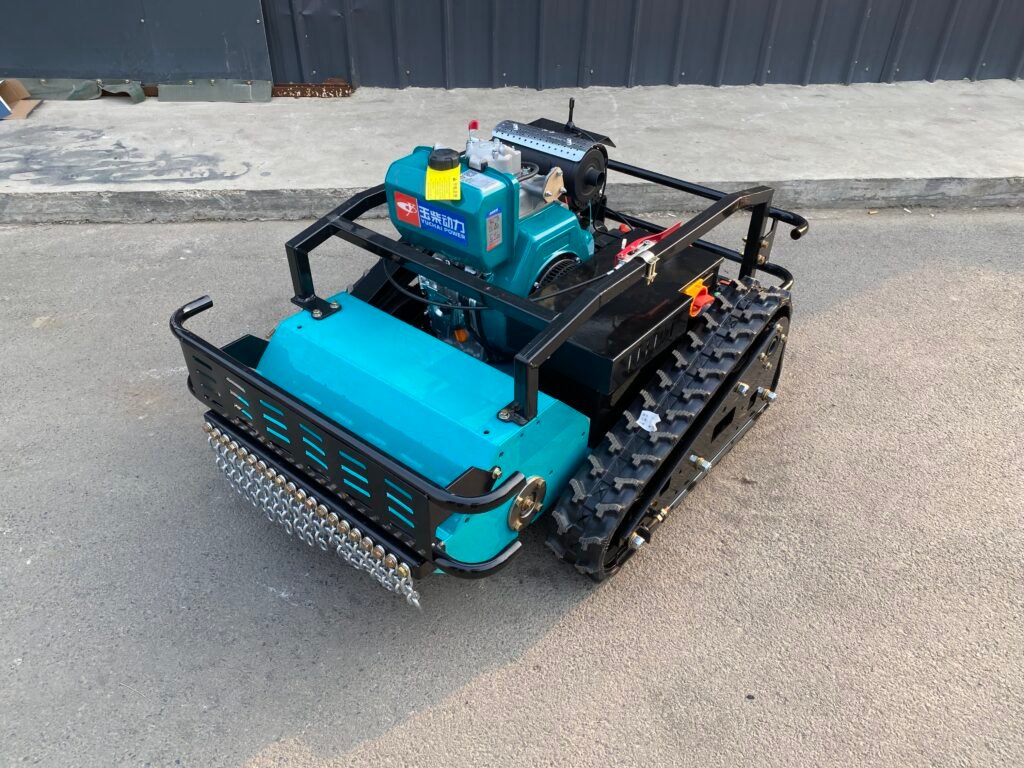
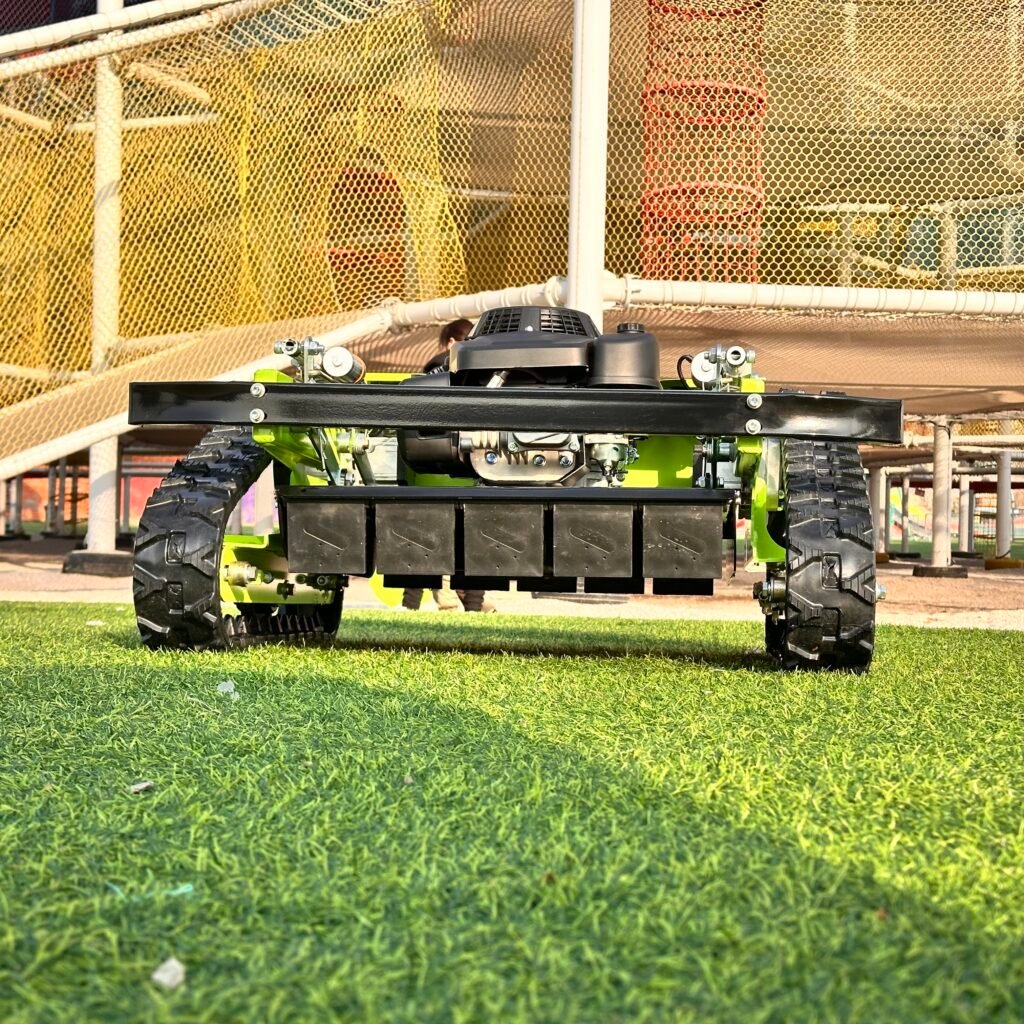
- Remote-controlled mower: a human drives it with a handheld remote (often 2.4GHz).
- Robotic mower: it runs “by itself” with sensors + boundary wire / RTK / mapping.
They look similar, but they behave differently in compliance, cost, and after-sales. Remote-controlled units usually need stronger drive systems (they’re often used on slopes, rough ground, roadside work), while robotic units put more budget into navigation and docking/charging logic.
Why this matters for MOQ:
- Remote-controlled mowers often have more mechanical variants (track vs wheel, deck width, blade type, motor power). More variants = higher “effective MOQ” because the factory wants fewer SKUs per batch.
- If the remote uses radio, buyers must plan for radio compliance (EU RED / FCC Part 15), which can influence labeling and documentation.
2) Typical China Wholesale MOQs (and what changes them fast)
There isn’t one universal MOQ, but there are patterns that show up across Chinese OEM/ODM factories for small machinery.
Common MOQ “layers” buyers should expect
A) Trial / first order MOQ
- Often set higher than buyers want, because the factory is protecting:
- scheduling time
- incoming component purchasing
- assembly line changeover
- packaging print runs
B) Steady-order MOQ (after the first run)
- Once the factory has proven the model + packaging + QC checklist, the MOQ often becomes more flexible.
C) “Private label MOQ”
- Even if the machine MOQ is manageable, printed packaging, custom decals, and manuals usually have their own minimums (set by printing suppliers).
What pushes MOQ up (fast)
- Custom color (especially non-standard powder coat / paint)
- Custom deck width or chassis changes
- Different engine family (gas vs hybrid vs battery)
- Non-standard battery pack (different cells/BMS)
- Custom remote + receiver pairing
- New safety features (E-stop layout, guarded deck redesign)
What usually keeps MOQ down
- Choosing a factory’s existing platform model
- Doing logo + sticker + carton first, and saving structural changes for later
- Accepting a standard BOM for the first order, then optimizing after field feedback
Reality check: if a supplier promises “any MOQ is fine” on a complex machine, that’s not always good news. It can mean they’re not controlling their supply chain (and later they’ll miss delivery because key parts were never reserved).
3) Realistic Lead Times: From Sample to On-the-Water
Lead time is where most wholesale projects go off the rails—especially if the buyer counts only “production days” and forgets tooling, packaging, testing, and shipping windows.
A realistic lead-time breakdown
Step 1: Spec confirmation (3–10 days)
- finalize model, engine/battery, deck width, track/wheel, accessories
- confirm label artwork, carton marks, manual language, spare parts list
Step 2: Pre-production sample (2–6 weeks)
- If everything is off-the-shelf, samples can be quick.
- If there’s tooling or a new bracket/deck design, it stretches.
Step 3: Mass production (4–10+ weeks)
- Many sourcing guides cite wide ranges like 30–60 days for production (and longer if tooling/prototyping is included).
- For machinery with purchased components (motors, controllers, battery packs), the real driver is often component lead time, not assembly speed.
Step 4: QC + rework buffer (3–10 days)
- Skipping this buffer is how buyers end up paying air freight for “missing” parts later.
Step 5: Shipping
- Air is faster but expensive and often complicated by batteries.
- Sea is cheaper but slower, and scheduling can shift week to week.
A smart way to think about lead time:
Instead of asking “How many days to produce?”, ask “What is the latest date the factory must start production to hit the ETD, and which parts are long-lead?”
4) Private Labeling: What’s Easy, What’s Risky, What Costs More
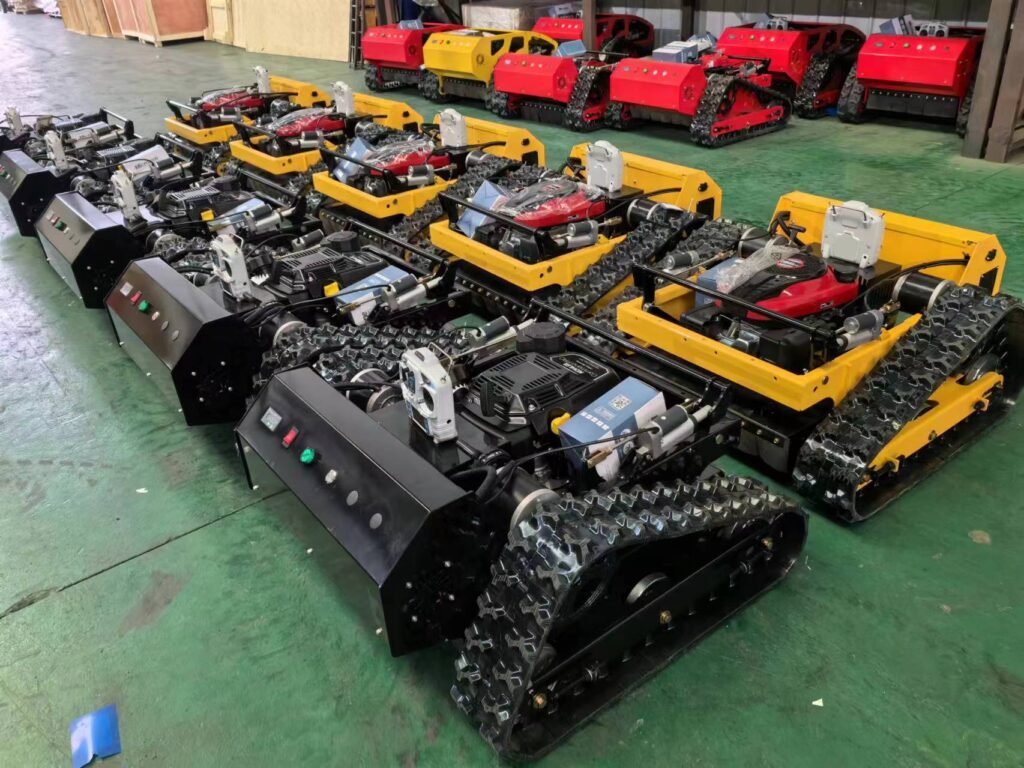
Private label is not just “put a logo on it.” For remote-controlled mowers, the safest private label path is staged.
Level 1 (fast + low risk): “Surface branding”
- Logo decals
- Nameplate
- Carton printing
- Manual cover branding
This is the best way to launch quickly without creating a compliance mess.
Level 2 (still manageable): “Customer experience branding”
- custom color scheme
- branded remote shell / silicone sleeve
- branded accessory kit layout
- spare parts labeling system
Level 3 (high risk if rushed): “Structural or electrical changes”
- changing controller logic / speed profiles
- redesigning the deck safety guarding
- changing battery pack spec or BMS
- changing radio module (remote/receiver)
Level 3 changes can trigger new testing and new documentation—especially for radio and safety compliance.
Private label workflow that actually works
- Freeze the base model (platform selection)
- Lock the branding files (vector logo, Pantone/RAL, label positions)
- Confirm compliance labels (CE/UKCA/FCC statements, serial plate layout)
- Run a labeled pilot batch
- Collect field feedback
- Only then consider structural upgrades
A helpful negotiation angle:
Many factories can support private label planning (artwork, carton marks, manual layout) if the buyer commits to a repeat program. A clear production plan often gets better cooperation than squeezing $50 off the unit price.
5) Compliance & Paperwork: CE/UKCA/FCC, batteries, noise, and radio remote
This is the part that causes the biggest “surprise cost” after a deal is signed.
If selling into the EU/EEA: expect a “stack” of requirements
Remote-controlled mowers can touch multiple EU rules depending on design:
- Machinery safety (historically Directive 2006/42/EC; replaced by EU Machinery Regulation 2023/1230, applicable from 20 January 2027).
- Outdoor noise labeling: Directive 2000/14/EC requires noise marking/DoC for in-scope outdoor equipment, and the noise label often accompanies CE marking.
- Radio Equipment Directive (RED) 2014/53/EU if the mower or remote uses radio (2.4GHz is common).
- EMC (electromagnetic compatibility) is often part of the compliance planning, especially with motor controllers and radio.
- RoHS may apply to electrical/electronic equipment in many cases and is commonly requested as part of documentation sets.
Also note: the EU Low Voltage Directive has voltage scope thresholds (often relevant to chargers, power supplies, and higher-voltage systems).
If selling into the USA/Canada
- If the remote control uses unlicensed radio, buyers typically need to consider FCC Part 15 (and Canada’s equivalent regime). The eCFR Part 15 text defines rules for operating certain devices without an individual license.
- Safety expectations often reference voluntary mower standards (CPSC lists ANSI/OPEI standards for mowers, including robotic mower safety standards).
Batteries: the paperwork that blocks shipments
If the mower is battery-powered (or even shipped with spare packs), logistics can stall without the right documents.
- Lithium batteries must be tested to UN 38.3, and “test summaries” are a recognized requirement in many shipping contexts.
Practical takeaway: even if the mower is perfect, missing battery documentation can delay air or sea export.
Buyer tip: require a documentation checklist in the contract: DoC set, test reports (as applicable), labels, serial format, and battery UN 38.3 test summary availability.
6) Quality Control Checklist (the stuff that prevents warranty nightmares)
For B2B importers, the biggest profit leak is not the purchase price—it’s after-sales: blade failures, controller faults, water ingress, track derailments, remote pairing issues, and “mystery” battery shutdowns.
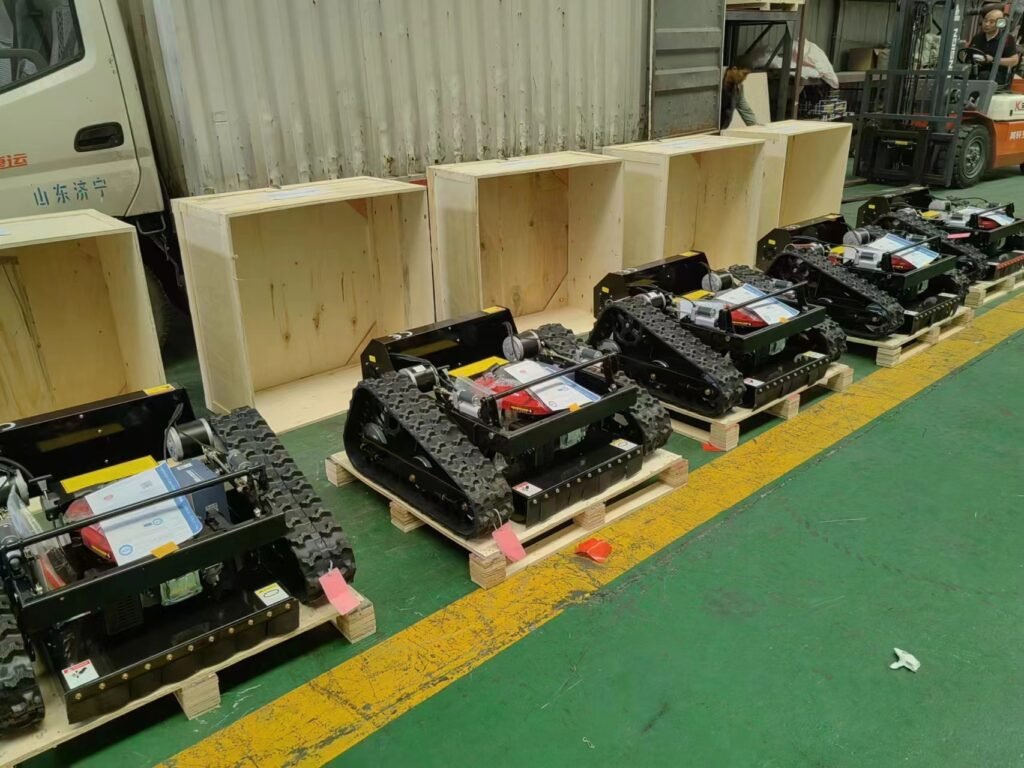
Here’s a field-friendly QC checklist buyers can give to a third-party inspector.
A) Functional tests (every unit)
- forward/reverse response smoothness
- emergency stop function (remote + machine)
- fail-safe behavior if signal drops
- brake/stop distance under load
- blade engagement stability
- thermal check after continuous run
B) Wiring + sealing (spot checks + teardown samples)
- harness routing: no rubbing points, no sharp edges
- controller enclosure sealing (gasket fit, cable glands)
- connectors: locking tabs and strain relief
- IP protection expectations should match real usage (wet grass + washing)
C) Drive system (this is where slope machines live or die)
- track tension consistency
- sprocket alignment
- gearbox noise and heat
- motor current draw under load (look for imbalance left vs right)
D) Battery system
- pack labeling matches paperwork
- BMS protections confirmed (over-current, under-voltage, temperature)
- charger compatibility and correct markings
E) Consumables + spares kit
- blades are standardized and easy to reorder
- belts (if any) have a documented part number
- spare fasteners, shear pins, or blade bolts included
Key B2B move: define a spare parts package for the first order (for example 1–3% parts value). That’s cheaper than paying express shipping later.
7) Pricing Structure: How factories build quotes (and where buyers overpay)
Remote-controlled mower quotes usually bundle:
- base machine BOM (drive, deck, engine/battery)
- controller + remote set
- packaging
- warranty risk margin
- export packing (pallet/steel frame/crate)
- documentation support level
Where buyers overpay:
- asking for 6–8 custom changes before the first batch (factories price uncertainty)
- ordering too many SKUs in one container (line efficiency drops)
- ignoring spare parts strategy (later emergency shipments cost more than any “discount”)
Where buyers save money safely:
- standard platform + private label first
- focus on durability upgrades that reduce warranty returns (sealing, harness, deck guarding)
- negotiate production scheduling with a clear forecast
8) Payment Terms, Incoterms, and Shipping Choices that reduce risk
Payment terms that are common in private label
Many sourcing and private label guides reference structures like 30% deposit + 70% balance before shipment as a common pattern (though real terms depend on relationship and size).
For larger buyers, it’s reasonable to negotiate:
- staged payments tied to milestones (material arrival, mid-QC, pre-shipment)
Incoterms: pick one on purpose
Incoterms define tasks, cost, and risk split in international trade.
For first-time mower imports, many buyers prefer:
- FOB (buyer controls freight, clearer cost visibility)
- CIF (simpler, but buyer must watch insurance/coverage details)
- DDP (simple on paper, but can hide taxes/fees inside the quote—buyers should audit carefully)
If the buyer team is still building logistics capability, use FOB but hire a freight forwarder that routinely handles battery goods.
9) Supplier Vetting & Anti-Fraud Moves (without turning into a detective)
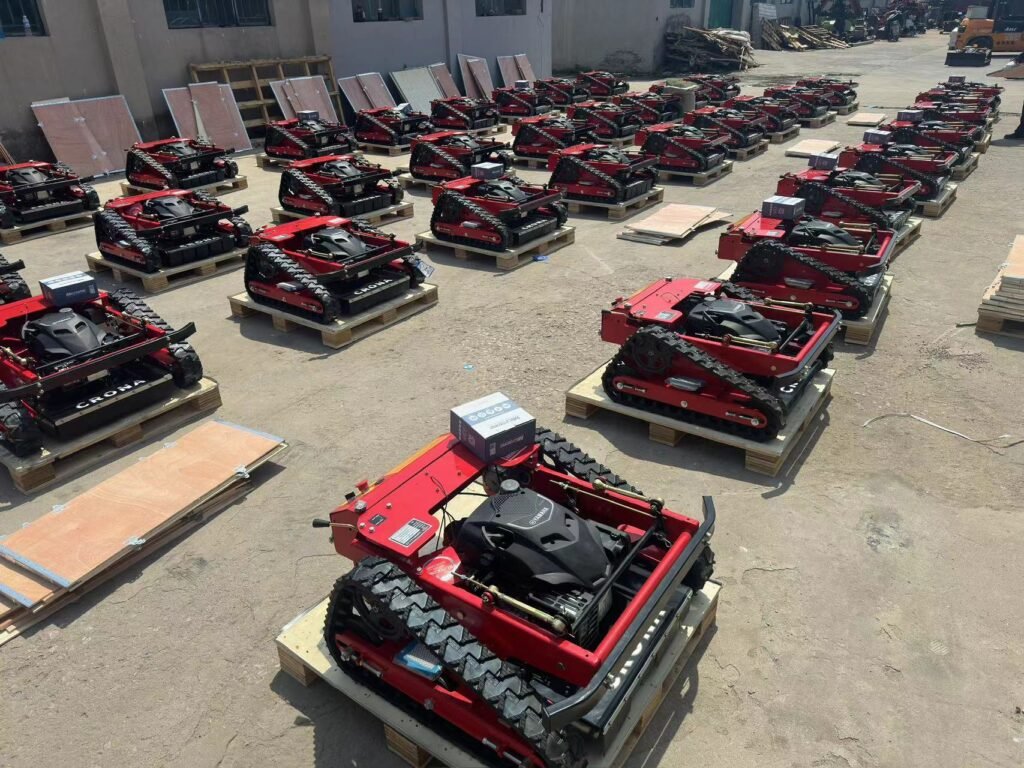
For machinery, the biggest risks are:
- “certificate theater” (pretty PDFs that don’t match the product)
- trading companies posing as factories
- last-minute material swaps (battery cells, controllers, bearings)
Practical vetting steps:
- Factory video walk-through (welding/assembly area, test station, packing area)
- Serial number + nameplate control: ask how they manage traceability
- Ask for a real documentation pack from an older shipment (with serial examples)
- Third-party inspection: at least pre-shipment inspection on the first order
- Parts consistency check: open 2–3 units randomly and match key components to the BOM
10) A Practical RFQ Template (copy/paste)
Below is a buyer-friendly RFQ format that gets clearer answers and faster quotes.
Product
- Remote-controlled lawn mower (operator remote, not autonomous)
- Target usage: flat / slope (max slope ___ degrees)
- Cutting width: ___ mm
- Drive: tracks / wheels
- Power: gasoline / battery (battery: ___ V, ___ Ah, removable? yes/no)
Order
- Trial order quantity: ___ units
- Target annual volume: ___ units
- Target market: EU / UK / US / CA / AU
Private Label
- Logo placement: decals / plate / both
- Color: standard / custom (RAL/Pantone ___)
- Carton: brown / color printed
- Manual language: ___
Compliance documents required
- CE/DoC pack (if EU/UK)
- Noise marking requirements (if applicable)
- Radio compliance (if wireless remote)
- UN 38.3 test summary availability (if battery)
- Serial number format + traceability method
Quality
- Warranty target: ___ months
- Required QC: functional test on 100% units + photo record
- Spare parts: include starter pack (list top 20 parts + quantity)
Commercial
- Incoterm: FOB ___ port / CIF ___ / DDP ___
- Target shipment date: ___
- Payment preference: deposit + balance / LC (if applicable)
Where “Nicosail” fits
Many importers who add remote-controlled mowers are already selling compact machines for landscaping and property maintenance (mini excavators, compact tracked loaders, skid steers). One practical strategy is to reduce supplier complexity by keeping the compact equipment line with a stable factory partner—then use that time and bandwidth to vet the mower category properly.
Brands like Nicosail (factory-based, export-focused compact equipment supplier) can be a useful anchor supplier for the earthmoving side of a dealer portfolio, while the mower sourcing process runs with a dedicated checklist like the one above. The result is fewer moving pieces: fewer late shipments, fewer labeling mistakes, and fewer “who’s responsible?” arguments when the season is already in full swing.
FAQ
1) What MOQ should be expected for a first order?
Expect a higher MOQ for the first run, especially if custom packaging and labeling are included. The most reliable way to lower MOQ is choosing an existing platform model and limiting custom changes to decals/cartons for the first batch.
2) What lead time is realistic for private label remote-controlled mowers?
A realistic plan includes sample time + component purchasing + production + QC buffer + shipping. Many sourcing references show production commonly landing in the 30–60 day range (or more when tooling/prototyping is involved).
3) Can a factory do full OEM (custom structure) with low MOQ?
It’s possible, but risky. Full OEM changes usually increase testing needs, failure risk, and rework. The safer path is phased: private label first, structural changes later.
4) Does a wireless remote create extra compliance work?
Yes. In the EU, radio devices typically fall under the Radio Equipment Directive framework. In the US, FCC Part 15 rules often apply to unlicensed transmitters.
5) What battery documents are most likely to delay shipping?
UN 38.3 testing and the ability to provide a lithium battery test summary are common shipment blockers when missing.
6) What’s the #1 QC check that reduces warranty claims?
Sealing + wiring routing + controller enclosure quality. Water + vibration issues create the most expensive “mystery failures,” especially in wet grass environments.
7) Should FOB, CIF, or DDP be chosen?
FOB gives buyers more control and transparency. CIF is simpler but needs careful review of what’s included. DDP can be convenient but must be audited so duties/taxes/fees don’t get buried.
Wrap-up Summary
Wholesale importing remote-controlled lawn mowers from China can be very profitable—but only when the project is managed like machinery, not like a simple consumer product.
- MOQs move based on platform choice, SKU count, and how deep private label changes go.
- Lead time is rarely just “production days”—it’s samples, components, packaging, QC buffer, and shipping windows.
- Private label works best in phases: logo/packaging first, structural/electrical changes later.
- Compliance is a documentation system: machinery safety + noise labeling + radio + battery transport paperwork, depending on the target market.
- Strong QC and spare parts planning protect margins more than negotiating the last few dollars off unit price.


