
1) What “RC Lawn Mower” Really Means (and Why It Matters)
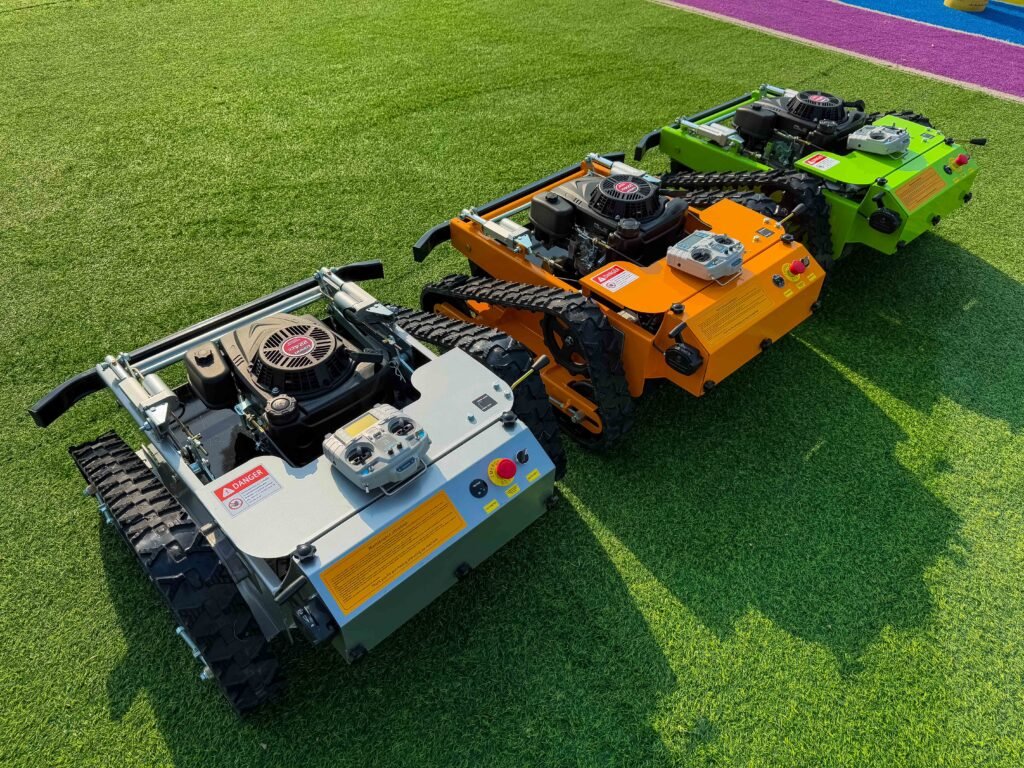
An RC lawn mower isn’t a “remote-control toy.” In the professional world, it usually means a tracked, low-center-of-gravity mower that can be operated from a safe distance to handle:
- Steep slopes
- Roadside shoulders
- Ditches and embankments
- Solar farms
- Orchards/vineyards
- Rough, hidden-object grass (stones, sticks, wire—real-world stuff)
Most pro RC mowers fall into two cutting styles:
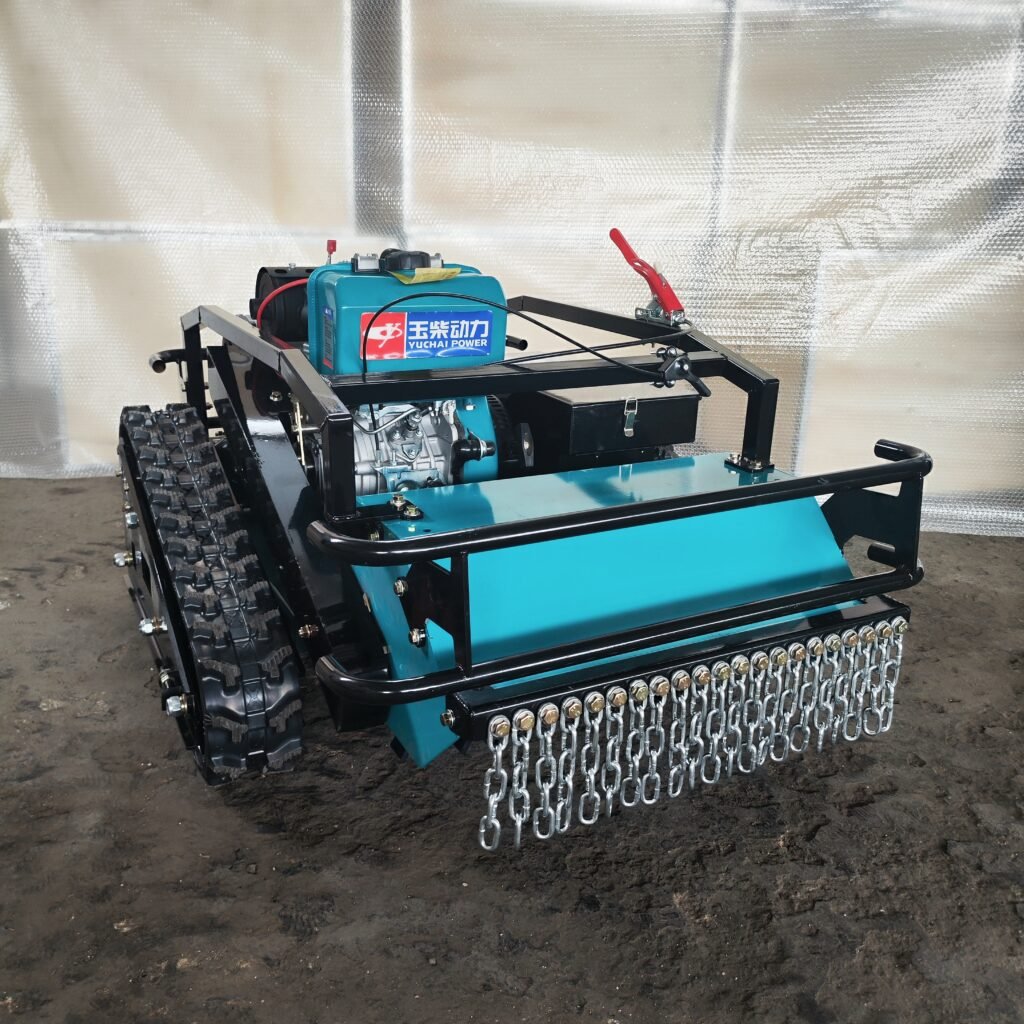
- Flail mower (hammer blades): better for rough vegetation, brush, uneven ground, hidden debris.
- Rotary/mulching deck: cleaner finish on maintained lawns, higher “nice-looking” result.
When buyers say “RC mower,” what they usually want is simple:
keep people off dangerous slopes, cut faster, and reduce labor headaches.
2) Why Lawn Care Is Changing Fast
Lawn care used to be “labor + walk-behind + ride-on.” That model is under pressure:
- Labor is harder to find and keep. Turnover hurts scheduling and quality.
- Safety requirements are tighter. Slopes + ride-ons are a real accident risk.
- More work is happening in risky places. Roadsides, solar farms, flood-control channels, rail lines.
- Customers want predictable results. Municipal contracts, commercial properties, and utility sites are not forgiving.
So the market is moving toward machines that deliver:
- safer operation
- repeatable output
- lower cost per hour
- better utilization in tough terrain
RC mowers fit that trend perfectly.
3) Why RC Mowers Are the Direction the Market Is Moving
Safer slope mowing (this is the big one)
A slope doesn’t care how experienced the operator is. Slips and rollovers happen fast. With RC mowing, the operator can stand uphill, on stable ground, and still finish the job.
Productivity without “hero operators”
Traditional slope mowing often depends on one or two super-experienced people. That’s a fragile business model. RC mowing makes performance more consistent across a team.
Better access, less property damage
Tracked RC mowers spread weight better. That means:
- less turf damage
- better grip on wet areas
- less chance of getting stuck
Business math that actually works
Even if an RC mower costs more than a walk-behind, it can:
- cut labor hours per job
- reduce insurance/safety incidents
- expand service offerings (you can bid on slope work confidently)
4) Why “Made in China” Is No Longer the Red Flag People Think
There’s a reason China is becoming the default sourcing choice for RC mowers:
1) The supply chain is stacked in one place
RC mowers are a mix of:
- power system (engine or battery)
- drive system (tracks, motors, gearboxes)
- cutting system (flail/rotary)
- remote control electronics + safety systems
- chassis structure + coating
China has dense clusters for these parts. That means faster iteration, better cost control, and easier scaling.
2) Factories have learned export standards the hard way
The good factories build for:
- CE/UKCA compliance workflows
- documentation packs
- traceability
- batch consistency
- packaging for sea freight
Not every factory is good, but the strong ones are very mature now.
3) Value is not only “cheap price”
The smarter buyers aren’t chasing the lowest price. They’re chasing:
- stable quality
- reliable lead time
- spare parts continuity
- fast engineering response
- competitive landed cost
That’s where the best Chinese manufacturers are winning.
5) The Real Worries Buyers Have — and How to Solve Them
Let’s be honest: buyers hesitate for good reasons. Here’s the shortlist, plus practical fixes.
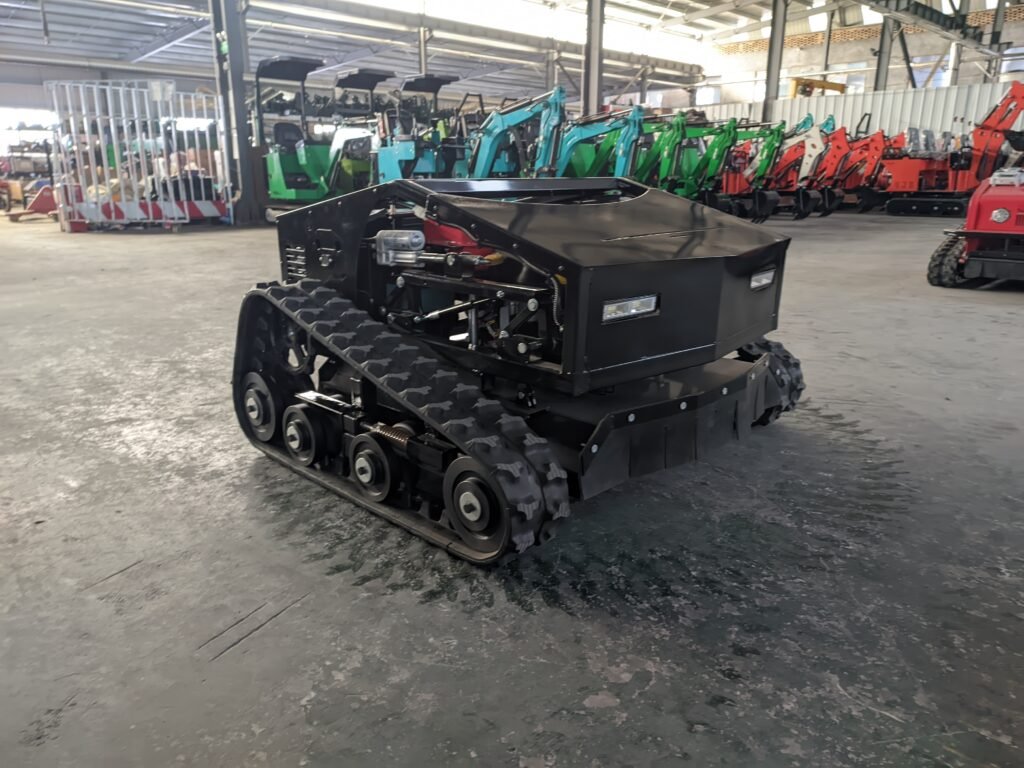
Worry A: “Quality looks good in photos, then fails in the field.”
Fix: require proof of process, not just a finished machine.
Ask for:
- factory inspection flow (incoming inspection → in-process → final)
- real test videos (not just cutting grass for 2 minutes)
- serial number tracking and test records
- weld quality controls + coating process description
A serious supplier can show how quality is controlled, not just “trust us.”
Worry B: “Certificates can be fake.”
Fix: verify certificates through issuing bodies and match them to model numbers.
Also:
- check whether the certificate covers the exact model
- check if the “manufacturer name” matches the factory entity
- confirm that key components match what the certificate assumes
Worry C: “Spare parts disappear after 12 months.”
Fix: lock a spare parts plan into the purchase.
Minimum good practice:
- a recommended spare kit per 10 units
- a 2–3 year spare parts supply commitment
- parts drawings + BOM with part numbers
- clear shipping method for urgent spares
Worry D: “Shipping delays ruin the season.”
Fix: plan around peak season and avoid fantasy timelines.
Good importers do:
- pilot batch off-season
- pre-booked shipping windows
- buffer stock of top sellers
- packaging checks (damage = delays + warranty fights)
6) Key Specs That Decide Whether an RC Mower Is “Pro-Grade” or “Toy-Grade”
This is where most buyers get fooled. The brochure always looks great. These are the specs that actually matter.
A) Slope rating (and whether it’s real)
A “45° slope” claim is easy to print. What matters is:
- stable center of gravity
- track design + tensioning
- hydraulic/electric drive torque
- braking and fail-safe behavior
A good way to check: ask for a real slope test (video + conditions + load).
B) Remote control reliability + safety logic
Look for:
- emergency stop that kills power predictably
- loss-of-signal behavior (stop, brake, or return-to-safe)
- water/dust protection for controller
- clear operating range in real conditions (trees, terrain can reduce range)
C) Deck durability (flail rotor quality is a tell)
On flail types, watch for:
- rotor balance quality (vibration = bearing death)
- bearing protection and sealing
- hammer blade material and mounting strength
- easy access for cleaning and maintenance
D) Cooling and thermal management
RC mowers often work slowly on steep slopes, under load, in summer. Heat kills:
- hydraulic oil (if hydraulic)
- electric controllers (if electric)
- engines (if gas/diesel)
Ask what happens after 2–4 hours continuous work.
E) Serviceability
If basic service requires removing half the machine, the dealer network will hate it.
Good signs:
- easy belt access
- clear grease points
- quick deck cleaning reminder design
- wiring harness that looks tidy and protected (not spaghetti)
7) Gas vs Diesel vs Electric RC Mowers: What to Pick
Gasoline
Best for: general contractors, mixed jobs, lighter budgets
Pros:
- simpler fueling
- common service knowledge
- good power-to-cost
Cons: - noise, emissions limitations in some regions
- fuel quality issues in some markets
Diesel
Best for: heavy duty commercial mowing, long runtime, torque needs
Pros:
- strong low-end torque
- good for long hours
Cons: - higher cost
- heavier
- more regulation headaches in some markets
Electric (battery)
Best for: noise-sensitive areas, eco contracts, indoor-adjacent zones
Pros:
- low noise
- instant torque
- lower routine maintenance
Cons: - battery shipping complexity
- range anxiety if not sized correctly
- battery replacement cost planning matters
Simple rule:
If the customer’s jobs are unpredictable and far from charging, engine power is still the safer bet. If contracts demand low noise and fixed routes, electric can win big.
8) What a Serious Chinese Factory Should Show You (Before Any Deposit)
This is the “supplier filter” that saves months of pain.
Must-have evidence package
- factory business license + export records (basic credibility)
- production line photos/videos (not just office photos)
- QC flow chart and checklists
- final test items list (what is tested on every unit)
- spare parts catalog + BOM
- packaging spec (foam, frame, pallet, rust protection)
- warranty policy in writing
Must-have behavior
A good supplier:
- answers questions directly
- doesn’t dodge on model details
- can explain changes and upgrades clearly
- offers realistic lead times
A risky supplier:
- changes specs casually
- refuses real test documentation
- avoids discussing failure modes and fixes
- pushes “big discount today” instead of solid support
9) A Practical Inspection + Testing Checklist (Simple, but Effective)
For distributors and importers, a lightweight but serious acceptance plan works best.
Pre-production sample (1 unit)
Check:
- real cutting performance in rough grass
- slope test (safe, controlled)
- remote range and signal loss behavior
- vibration levels (listen and feel—seriously)
- fastener quality (loose bolts are a bad sign)
- wiring protection and routing
Pilot batch (5–20 units)
Add:
- 2–4 hour continuous runtime test
- temperature checks around engine/controller/hydraulic tank
- repeatable start/stop behavior
- deck strike test (normal hidden objects, not extreme abuse)
Mass production acceptance
Require:
- serial number + final test record
- packaging photo per unit (or per batch)
- random inspection with a clear AQL plan
- spare parts kit shipped together
This is not complicated. It’s just disciplined.
10) Branding/ODM for Distributors: How to Rebrand Without Future Headaches
Rebranding is profitable, but only when it’s done cleanly.
Keep these items standardized
- core drivetrain
- controller platform
- deck structure
- key wear parts
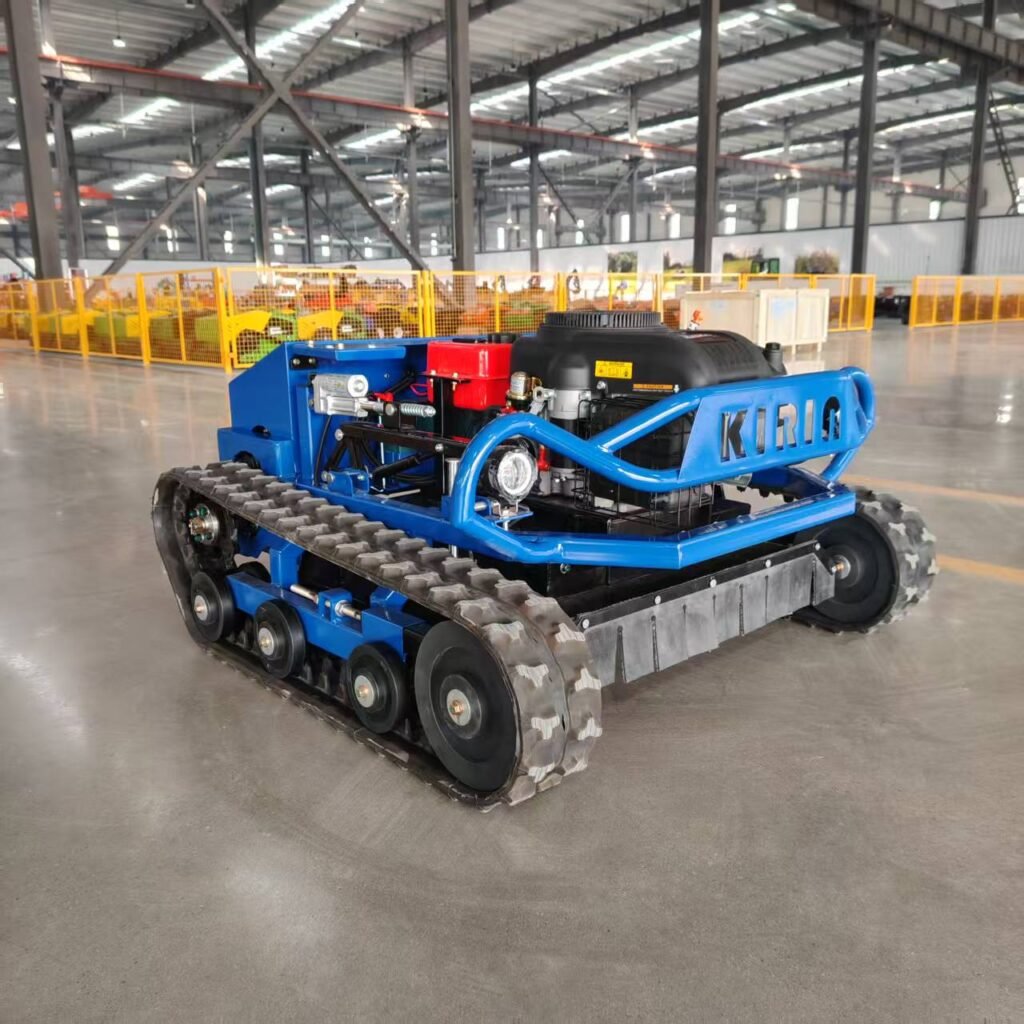
Change the “skin” safely:
- color and decals
- guards and covers
- small ergonomics
- packaging design
- documentation and label layout
Protect the brand with documentation
A good ODM setup includes:
- branded manuals
- parts catalog with your part numbers mapped to factory numbers
- consistent labeling
- compliance labeling done correctly (this is where people mess up)
11) Logistics Realities: Batteries, DG Shipping, Lead Time, Spares
Battery shipping is a separate world
If electric models are being imported:
- confirm battery certification requirements for transport
- confirm packaging and labeling rules
- expect longer prep time than engine models
Sea freight packaging is not optional
RC mowers are heavy and get handled roughly. Packaging should include:
- stable steel frame or reinforced crate
- anti-rust protection on exposed metal
- controller protected separately
- clear lifting points
Spares should travel with the first container
Waiting for spare parts later is how seasons get ruined. A basic “launch kit” usually includes:
- belts, blades/hammer sets
- bearings
- filters (if engine)
- track-related wear items (if applicable)
- common sensors/switches
- a controller unit (for dealer-level support)
12) Where RC Mowers Win the Hardest (Use Cases That Actually Make Money)
RC mowers are not meant to replace every mower. They dominate in specific money zones:
- Highway and roadside mowing (safety + speed)
- Solar farm grass control (repeatable routes + low damage)
- Flood channels and embankments (risk reduction)
- Vineyards and orchards (tight terrain + stability)
- Commercial slopes around buildings (liability reduction)
In these jobs, RC mowing is not “nice to have.” It’s often the difference between:
- winning the contract
- or skipping the work because it’s too risky
Where Nicosail Fits
Many landscaping and land-management contractors don’t only mow. They also need machines for:
- cleanup
- material handling
- brush removal
- light earthmoving
That’s where brands like Nicosail are often considered—especially for mini excavators and compact tracked loaders that pair well with vegetation-management work. The useful point here is not “buy everything from one place,” but this:
A supplier with a serious engineering mindset—durability, hydraulics matching, QC discipline, and after-sales planning—tends to be the same kind of partner buyers should look for when sourcing RC mowers.
So even if the shopping list includes RC mowers from China, it’s smart to benchmark suppliers against the kind of quality systems seen in factories that consistently export compact equipment. That’s the standard that prevents “good sample, bad batch.”

FAQ
1) Are RC lawn mowers from China reliable enough for commercial work?
Yes—if the supplier is a real manufacturer with process control, not a trading-only operation reselling mixed batches. Reliability comes from consistency: drivetrain, deck balance, cooling, and final testing.
2) What’s the biggest mistake buyers make when importing RC mowers?
Buying based on brochure specs and price, without locking down testing, spare parts, and acceptance standards.
3) Flail or rotary deck—what should distributors stock first?
For most commercial buyers doing rough terrain, flail is the safer first bet. Rotary is great for “pretty finish” lawns, but flail handles surprises better.
4) What slope rating should be considered “real”?
Ignore marketing numbers until a real test is shown. A practical approach is to test under load on the steepest typical customer terrain with safe procedures.
5) How important is remote control range?
Very. But “range” isn’t just distance—it’s stability in real obstacles. Trees, terrain, and interference matter. Loss-of-signal safety behavior matters even more.
6) What warranty terms are normal for RC mowers?
Commonly 12 months for the machine, sometimes different terms for wear parts. The key is not the months—it’s how claims are handled and whether parts ship fast.
7) How should spare parts be planned for a new product launch?
A simple rule: ship a starter spare kit with the first container. Then track real failure and wear data for the next order.
8) Is electric RC mowing worth it right now?
It can be, especially for noise-sensitive contracts. But it needs better planning: battery logistics, charging strategy, and replacement cost planning.
9) How can certificate fraud be avoided?
Verify documents with issuing channels, ensure the certificate matches the exact model, and keep compliance labeling and manuals consistent with the certified configuration.
10) What’s the smartest way to start importing RC mowers from China?
Start with:
- one sample for functional testing
- a small pilot batch
- a clear acceptance checklist + spare parts plan
Then scale only after field feedback.
Summary
RC lawn mowers are moving lawn care forward because they solve the real problems: safety on slopes, labor pressure, and predictable productivity. And China is becoming the leading sourcing base because the supply chain, manufacturing scale, and export maturity make it possible to buy machines that are both competitive in cost and serious in performance—as long as the supplier is vetted properly.
The winning approach is simple:
- focus on the specs that truly decide durability (cooling, deck balance, drive system, safety logic)
- demand proof of process and testing
- plan spare parts and logistics like a business, not like a one-time deal
Do that, and “Made in China” stops being a worry—and starts being an advantage.


